Scan to Story.
Design Strategy
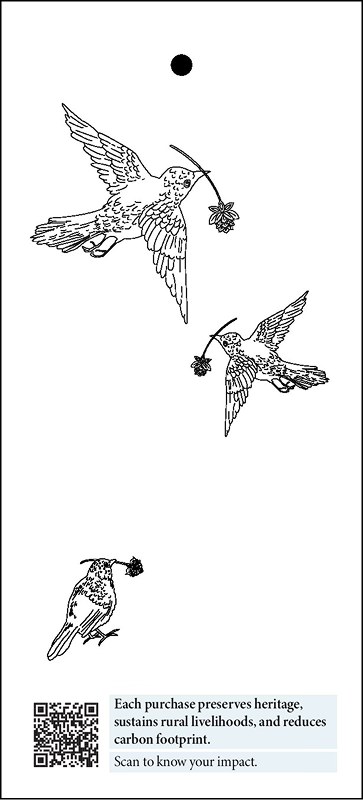
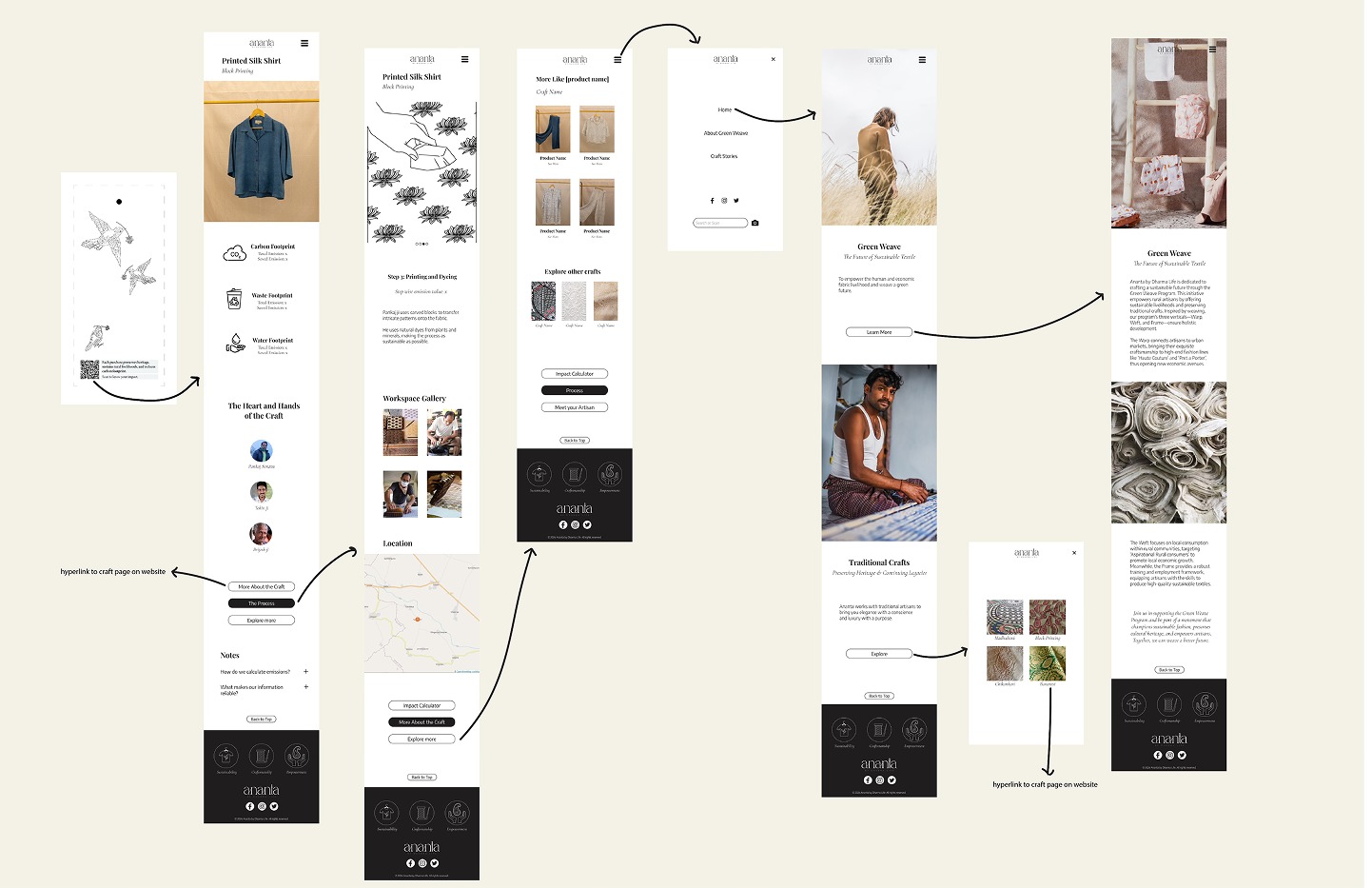
Sustainability claims are easy to print and hard to prove. The brief was to make Ananta’s claims checkable, not just statable. And the solution I brought to the table was a hang tag that didn’t just say “sustainable,” but linked, via QR, to the actual carbon, water, and waste data behind that specific product, along with the artisans and process that made it. The tag became an entry point, not an endpoint.
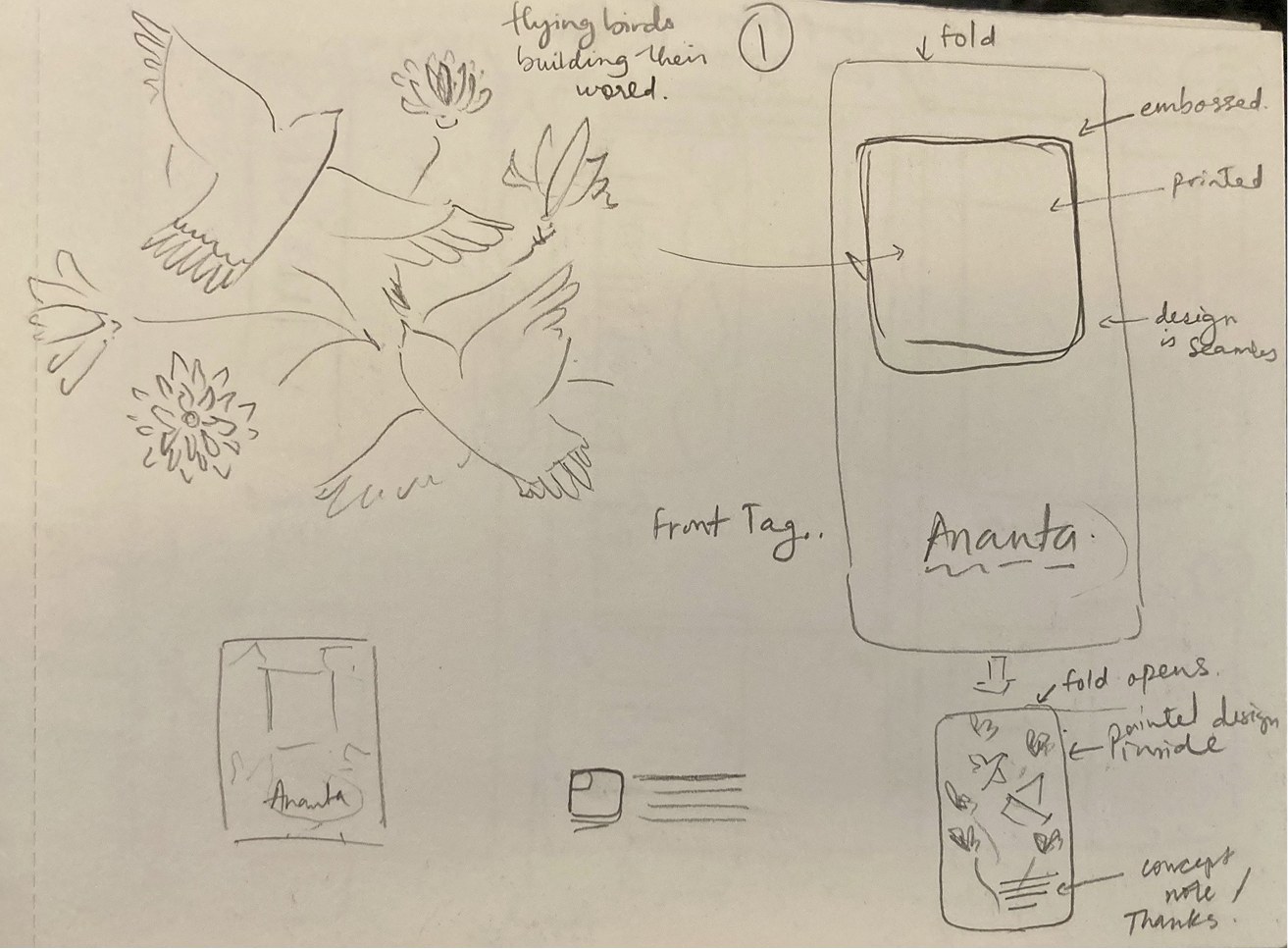
A Tag with Layers
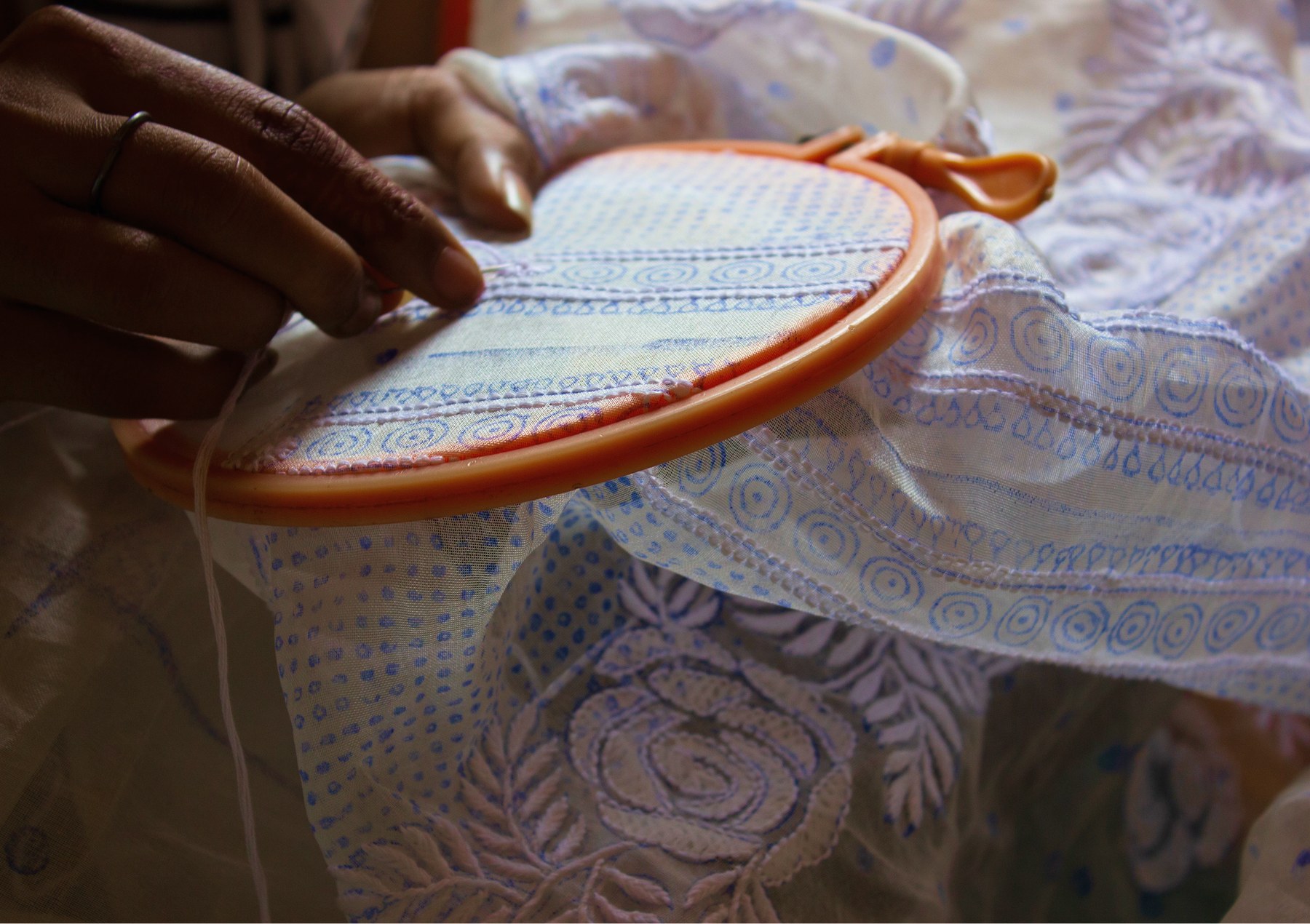
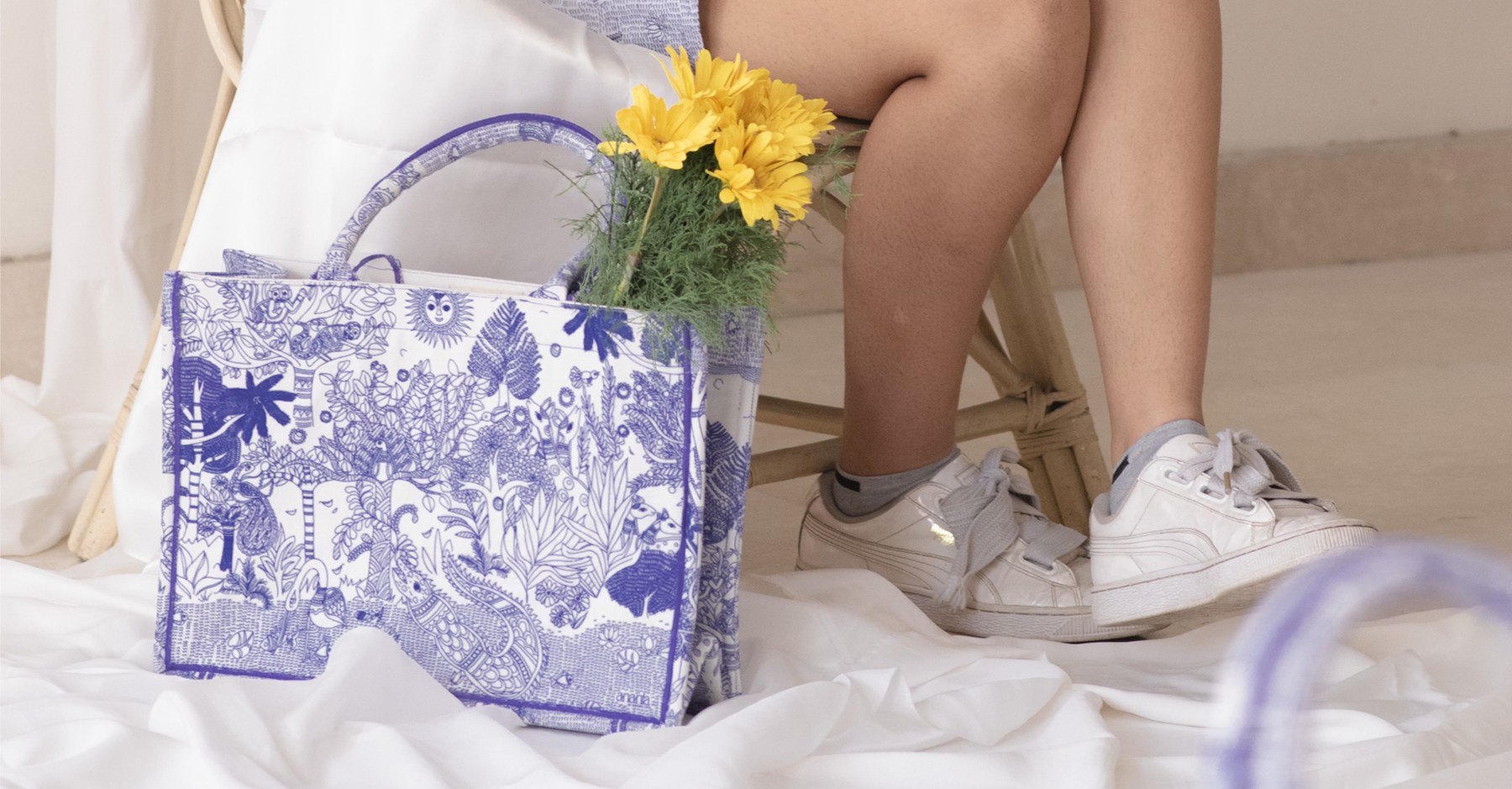
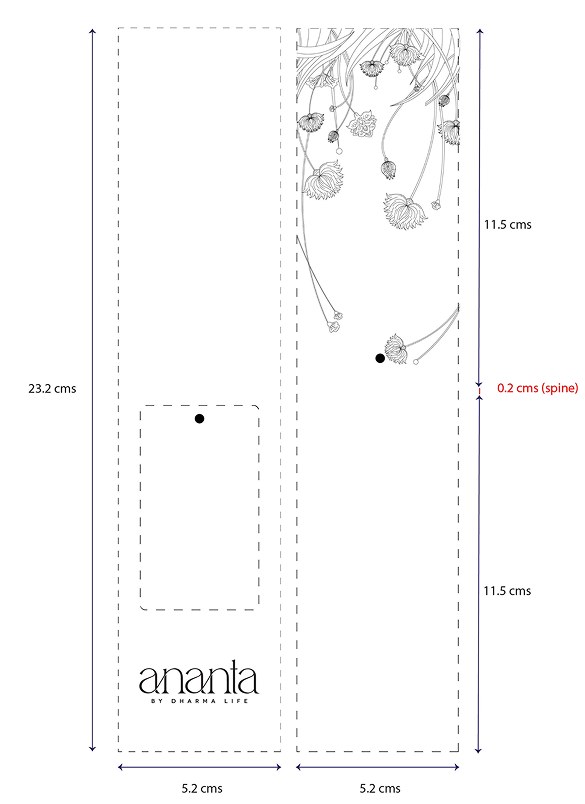
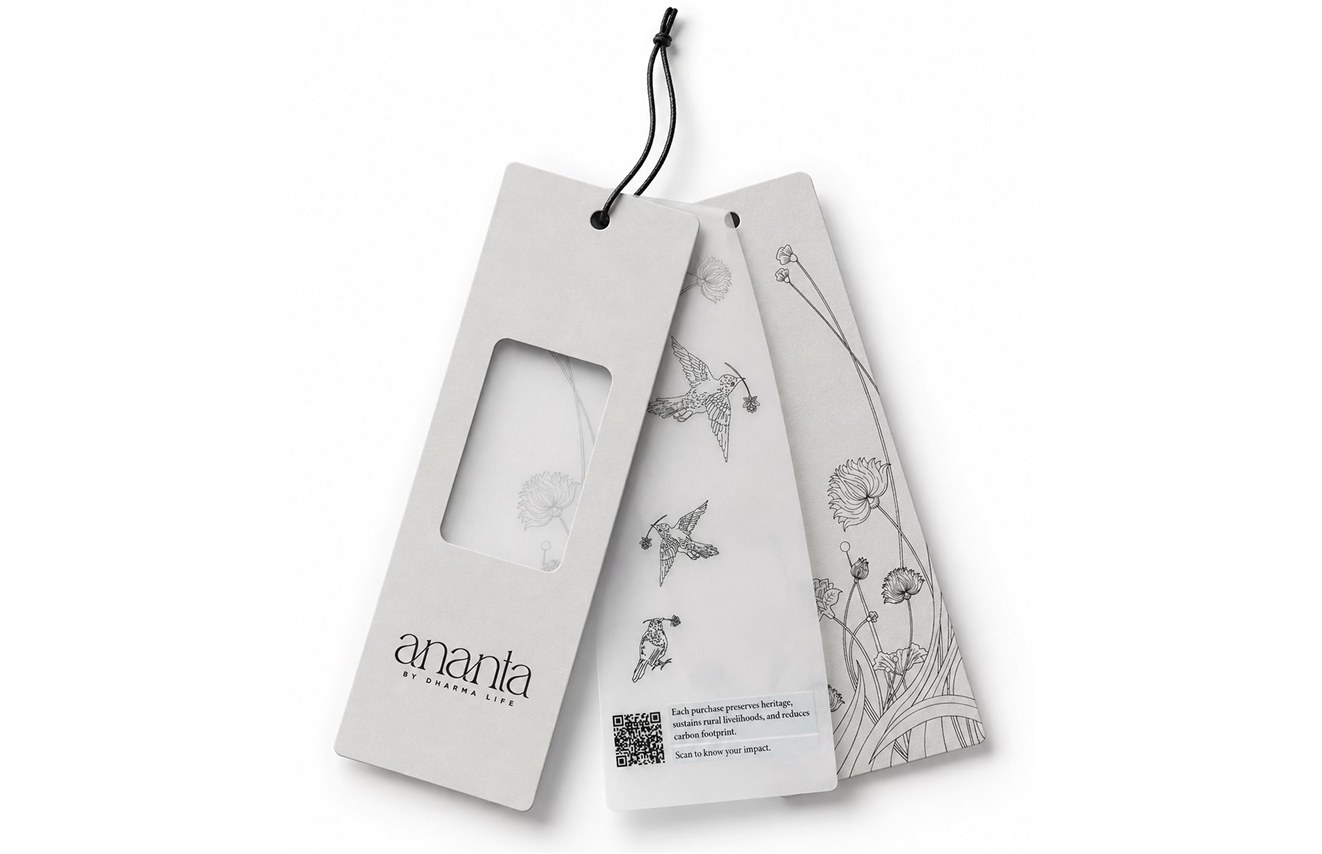
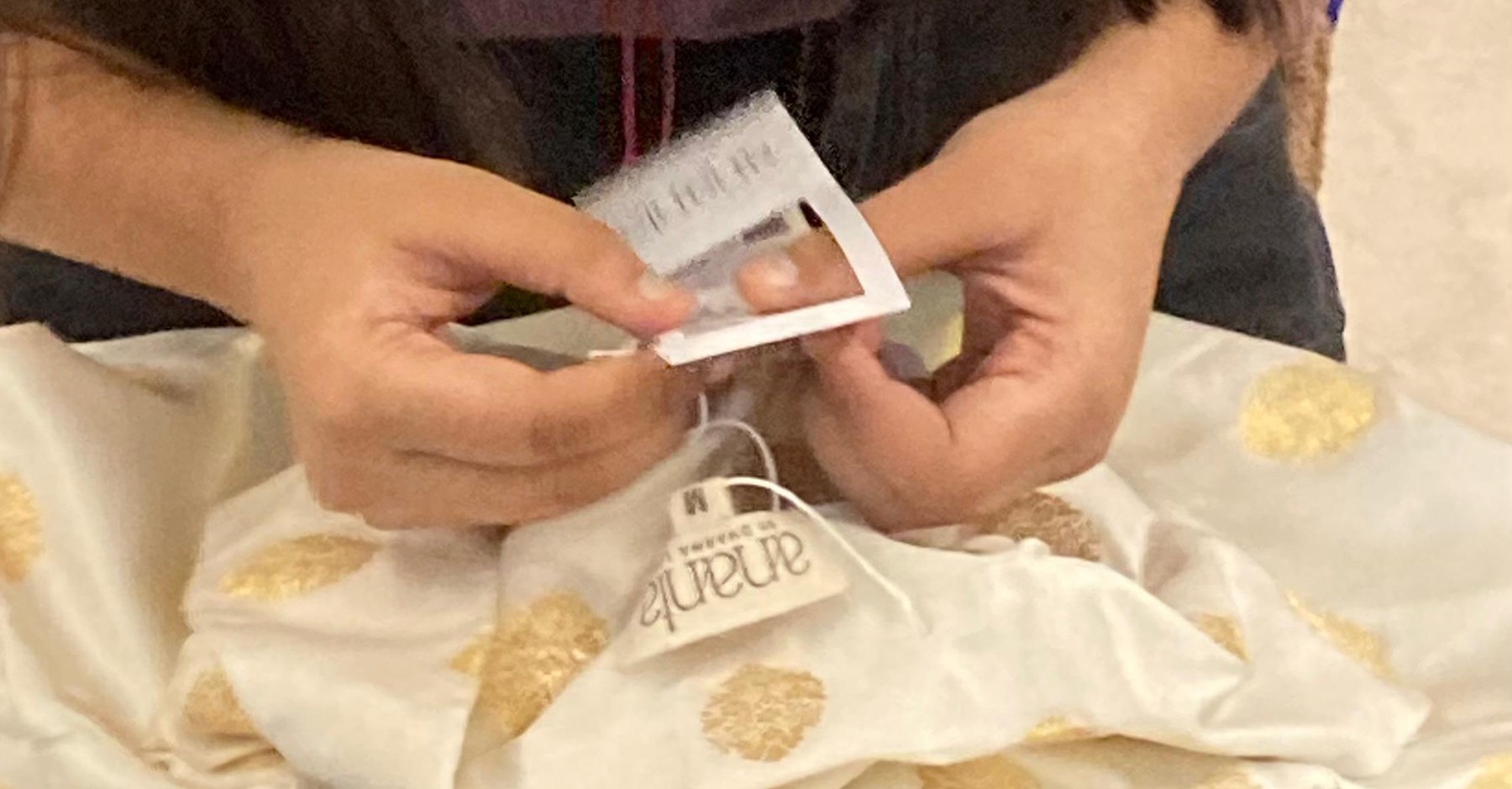
The tag itself was built as three parts inside one outer artwork cover: a nature-illustrated leaf that extended the brand’s visual language, and a second leaf carrying a unique QR code per product, so no two products pointing to the same page. Each was hand-assembled and attached product-by-product, tying the physical object directly to a specific digital record rather than a generic brand page. This was feasible because Ananta is a luxury slow fashion label selling unique and modern garments adorned with traditional Indian crafts.
From Scan to Story
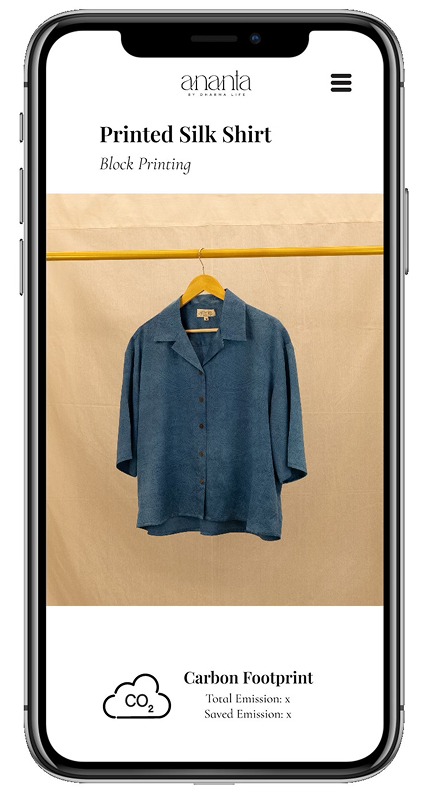
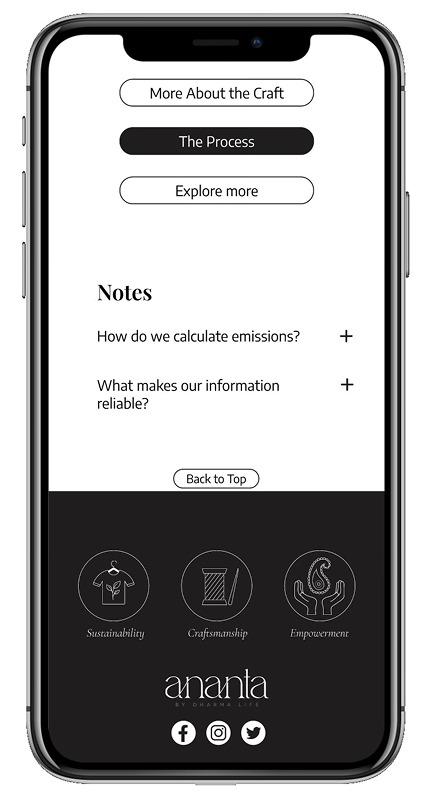
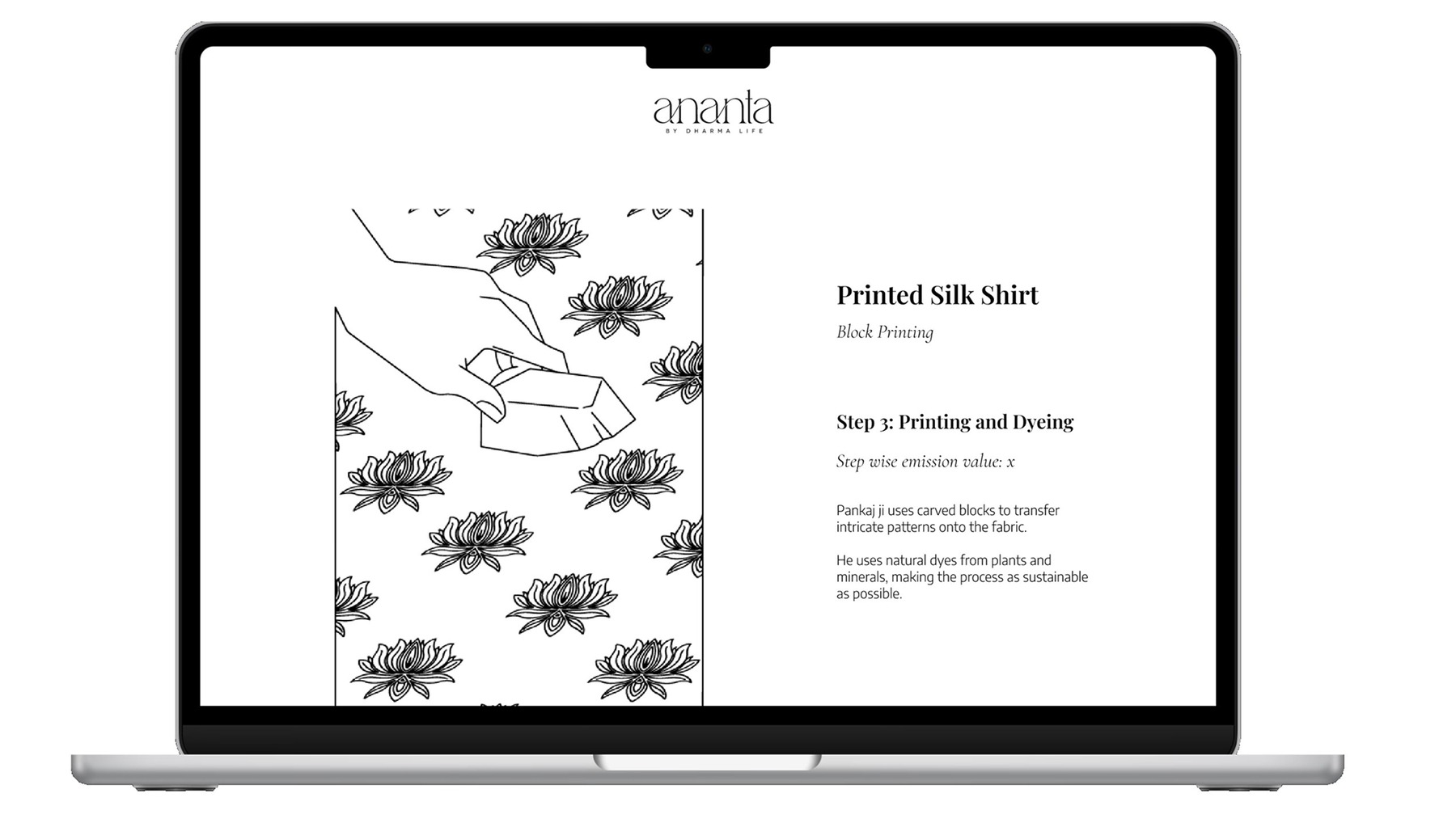
The QR led to a microsite built to hold a product’s full story: a carbon footprint readout, a step-by-step craft process, and the artisans behind the piece, alongside a three-pillar framework: Sustainability, Craftsmanship, Empowerment. This structure ran consistently across the system. The real time details could be added by the on-ground team using the micro-app the developers had already built for this purpose. The interface itself was designed end to end by me: navigation, product dashboard, and content structure, built to make dense sustainability data feel legible rather than like a spec sheet.
Outcome
The whole system was deployed and used in production for around two to three years, before Ananta began a broader website revamp this year. It was one of the first projects I built independently, start to finish, and saw being put into real use, not just presented as a concept.
Reflection
I was still an intern, but I was never treated like one. I was expected to take real accountability for real problems, and that expectation became the foundation of how I still work today.